

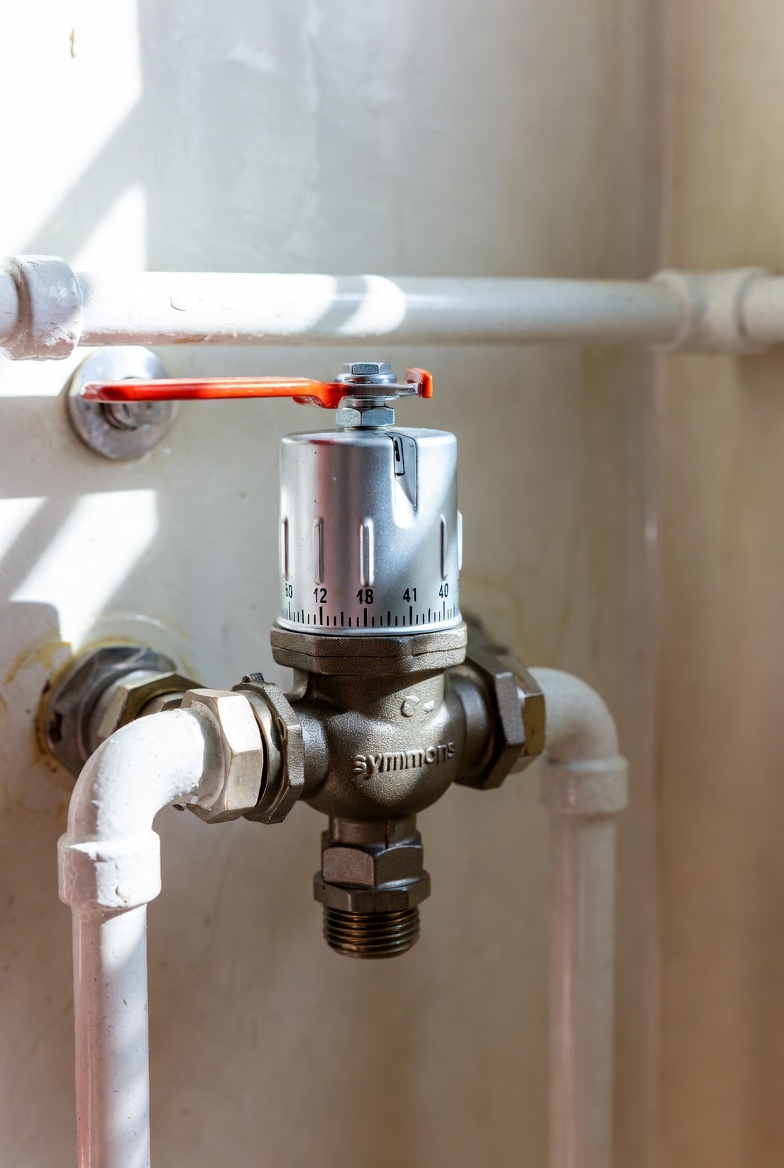
In this article, you will learn:
A pressure balancing valve maintains consistent shower water temperature by adjusting for sudden changes in hot or cold water pressure, preventing scalding and thermal shock.
These valves improve safety, comfort, and plumbing code compliance, especially in homes with older plumbing systems.
Professional installation and periodic inspection ensure long-term performance, typically lasting 10–15 years or more.
A pressure balancing valve, also known as a pressure-compensating valve, is a critical plumbing device designed to maintain a consistent water temperature and prevent thermal shock or scalding.
This safety feature is especially important in showers and baths, where sudden temperature changes can cause discomfort or injury.
In the Chicagoland area and beyond, pressure balancing valves are required by code in many localities to ensure safe and reliable water usage.
How Does a Pressure Balancing Valve Work?
The pressure balancing valve operates by sensing the pressure of the hot and cold water coming from the supply lines. When there is a sudden change in pressure—such as when someone flushes a toilet or starts a washing machine—the valve adjusts to compensate for the fluctuation. This ensures that the water temperature remains consistent, protecting against sudden bursts of hot or cold water.
Example: Without a pressure balancing valve, a sudden demand for cold water could cause a dangerous surge of hot water in the shower. With the valve in place, the system compensates for this pressure drop, maintaining a safe and steady temperature.
Benefits of Pressure Balancing Valves
Installing a pressure balancing valve in your plumbing system provides several advantages:
- Improved Safety: Prevents scalding or thermal shock caused by sudden changes in water temperature.
- Consistent Comfort: Maintains a steady water temperature during showers and baths, even when other fixtures are in use.
- Code Compliance: Meets plumbing code requirements in many areas, including Chicagoland.
- Enhanced Plumbing System: Upgrades older systems to modern safety standards.
Do You Need a Pressure Balancing Valve?
If your home was built before pressure balancing valves became a standard requirement, your plumbing system might not include this safety feature. Signs you may need a pressure balancing valve include:
- Sudden temperature changes in the shower when other water fixtures are used.
- Frequent complaints of scalding or cold bursts during water use.
- An older plumbing system without modern safety upgrades.
Tip: If you’re unsure whether your system includes a pressure balancing valve, contact a licensed plumber for an inspection.
Installation and Maintenance
Installing a pressure balancing valve typically involves retrofitting your plumbing system, which is best handled by a professional plumber. During installation, the valve is placed in the water supply line leading to the shower or bath fixture.
- Professional Expertise: A plumber ensures proper installation and code compliance.
- Maintenance: Regular inspections can keep the valve functioning effectively and extend its lifespan.
Cost Consideration: While installation involves an upfront cost, the added safety and comfort make it a worthwhile investment.
How Much Does It Cost to Replace a Pressure Balancing Valve?
Prices can vary based on single-handle (pressure-balancing) valve replacement and a full valve replacement. You will want to consult the professionals to determine the best and most cost effective solution for you and your family.
Frequently Asked Questions
Can I install a pressure balancing valve myself?
Installing a pressure balancing valve requires plumbing expertise and may involve cutting into supply lines. It’s recommended to hire a professional for proper installation.
Is a pressure balancing valve the same as a thermostatic valve?
No, a pressure balancing valve adjusts water pressure to maintain temperature, while a thermostatic valve directly controls water temperature by mixing hot and cold water.
How long does a pressure balancing valve last?
With proper installation and maintenance, a pressure balancing valve can last 10–15 years or more.
Need Expert Plumbing Services? Get in Touch with the Plumbers at ABC
If your plumbing system lacks a pressure balancing valve or you’re experiencing sudden temperature changes in your shower, ABC Plumbing, Sewer, Heating, Cooling, and Electric is here to help. Our experienced team can upgrade your system to include a pressure balancing valve, ensuring your safety and comfort.
Scroll further down the page, locate the ABC Plumbing location closest to you, and click the phone number to schedule a service call. Let us help you keep your home’s plumbing safe and efficient.
ABC Plumbing Locations
Arlington Heights, IL220 W Campus Dr | Largo, FL11701 S Belcher Rd Suite 127 |
Downers Grove, IL1001 Ogden Ave LL4 | Tampa, FL4326 W El Prado Blvd Suite 7 |
Evanston, IL828 Davis St UNIT 205 | |
Related blogs


Our Blog
VIEW ALL BLOGS
Clearwater, FL Leak Detection and Repair: Find Hidden Water Leaks
-
Rockford HVAC: Heating System Installation Guide
Installing a central heating system involves much more than choosing a furnace or heat pump. This guide walks Rockford-area homeowners through the professional installation process, including system sizing, ductwork, permits, venting, electrical connections, thermostat setup, and final commissioning. It also explains which tasks may be DIY-friendly, when licensed professionals are needed, and how proper installation and annual maintenance can improve comfort, efficiency, safety, and system longevity.READ MORE -
Tampa, FL Electrical Safety Inspections Checklist
Your electrical panel is the heart of your home’s electrical system, and regular inspections can help identify potential hazards before they lead to outages, equipment damage, or fire risks. This guide explains what Tampa Bay homeowners can safely check themselves and what licensed electricians inspect inside the panel, including breakers, wiring, grounding, corrosion, GFCI/AFCI protection, and surge protection. It also covers common warning signs, inspection frequency, and when repairs or upgrades may be necessary to keep your home safe and code-compliant.READ MORE -
Rockford, IL Plumbing: DIY Risks for General Plumbing
DIY plumbing can save money on simple projects, but more complex work can lead to leaks, water damage, code violations, and safety concerns when handled incorrectly. This guide explains which plumbing tasks homeowners can safely tackle themselves and when it’s best to call a licensed professional. It also covers common DIY mistakes, permits and code requirements, hidden costs, and how professional plumbing service can protect your home, warranties, and investment.READ MORE
Our Promises To You
-

Convenient For You
We Work on Your Schedule
-

Background Checks
We do Drug Tests And Background Checks Before Hiring
-

No Need For Stress
Get ABCs Worry-Free Guarantee at No Cost
-

No Surprises
Pricing is By the Job, Not the Hour