

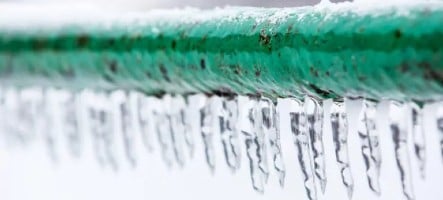
How to Prevent Frozen Pipes in Chicago at a Glance
A burst pipe can flood a home within hours of a thaw. To prevent it, keep your heat steady and never below 55°F, insulate and seal drafts around pipes, disconnect and drain hoses, open cabinet doors under sinks, and let a faucet drip during extreme cold.
Keep the heat on: Set your thermostat to at least 55°F, even when you're away.
Insulate exposed pipes: Wrap pipes in unheated areas with foam sleeves.
Seal cold air leaks: Close gaps around pipes, windows, and foundation openings.
Protect outdoor faucets: Disconnect hoses and shut off the interior valve to each hose bib.
Open cabinet doors: Let warm air reach plumbing on exterior walls.
Drip a faucet: Allow a small, steady flow during extreme cold.
Each step is explained below.
How Chicago Winters Freeze Pipes and Why They Burst
Water expands as it freezes, like a sealed bottle left in the freezer. The ice creates pressure between the blockage and a closed faucet, and pipes often split away from the ice itself. You usually discover the flooding when the ice melts.
Frozen pipes in Chicago are common because of long subfreezing stretches, sudden drops, and wind-driven cold that finds gaps in older brick and frame homes. In our experience, the pipes that fail most often sit in a cold wall, garage, or crawl space, even when the thermostat reads comfortably warm.
Which Pipes in Your Home Are Most at Risk
Walk through your home before winter and check these areas:
Basements and crawl spaces: A crawl space is a shallow, unfinished area beneath the home. Both sit near cold foundation walls, so keep them at or above 55°F.
Exterior walls: Pipes under kitchen and bathroom sinks often have little insulation between them and the outdoors.
Garages and attics: These areas are often unheated, and an open garage door pulls cold air toward pipes.
Outdoor hose bibs: A hose bib is the outdoor faucet where you connect a garden hose. Trapped water here is a common failure point.
Any pipe that has frozen before is a repeat risk.
Steps to Prevent Frozen Pipes Before Winter Hits
Complete these steps before the first sustained freeze. Our guide on ways to keep pipes from freezing during extreme cold offers more detail on each one.
1. Seal Drafts Around Plumbing Penetrations
Blocking cold air keeps pipes warmer. A plumbing penetration is any spot where a pipe passes through a wall, floor, or foundation. Check gaps around pipes, basement windows, and rim joists (the framing atop the foundation wall). Use caulk, weatherstripping, or expanding foam, and keep foam away from furnaces, flues, and water heaters.
2. Insulate Exposed Pipes With Foam Sleeves
To insulate pipes, choose plumbing-rated foam sleeves, fit them snugly, and close the seams. Start with garages, crawl spaces, and areas near foundation walls. Insulation slows heat loss but doesn't create heat, so it works best with air sealing.
3. Disconnect and Drain Garden Hoses
An attached hose traps water in the faucet. Drain it and store it indoors, then follow the faucet steps below.
4. Set the Thermostat to a Consistent Temperature
The best temperature to keep your house at to prevent frozen pipes is a steady setting through severe cold, with no overnight setback. Use 55°F as the minimum whenever the home is empty. That's a safety floor, not a guarantee, because pipes in exterior walls and garages can run colder than the thermostat reading. An annual furnace or boiler tune-up is one of the simplest ways to confirm your system is ready, and ABC's technicians can handle it.
5. Open Interior Doors for Better Heat Circulation
Closed doors can leave plumbing rooms cold. Keep doors open and registers and radiators clear.
Last Minute Actions Before an Arctic Blast
An arctic blast means several days of single-digit or subzero temperatures and wind chills.
1. Open Sink Cabinets on Exterior Walls
Warm room air can then reach the pipes. Move cleaning products out of reach of children and pets.
2. Let a Faucet Drip From Vulnerable Lines
Moving water is harder to freeze, and a drip faucet to prevent freezing relieves pressure. Use a small, steady drip at the faucet on the most exposed line, with a container beneath it. Dripping supplements insulation and heat but doesn't replace them.
3. Close Garage Doors and Vents
This limits cold air near water lines.
4. Verify Your Main Water Shutoff Works
The main shutoff valve stops water from entering your home. It's commonly near the water meter or where the main line enters the house. Label it, test it, and make sure everyone in your household knows where it is.
How to Winterize Outdoor Faucets and Hose Lines
Outdoor faucets often fail first because trapped water can freeze and crack the line inside the wall. Close the interior shutoff valve for each outdoor faucet (a plumber can add one if you don't have it), then leave the outdoor faucet open all winter so remaining water can drain and expand. Add snug foam covers from a hardware store. Frost-proof hose bibs place the shutoff inside the heated space, but you still need to disconnect hoses.
Safe Ways to Use Pipe Insulation and Heat Tape
Heat tape is an electric cable that wraps around a pipe to warm it. It helps with stubborn trouble spots but carries fire and electrical risks if installed incorrectly.
Protection Method | Best For | Key Consideration |
Foam pipe sleeves | Basements, crawl spaces, garages | Low cost, but only slows heat loss |
Heat tape | Extremely cold or drafty spots | Needs power and careful installation |
Pipe rerouting | Pipes that repeatedly freeze | Done by a licensed plumber |
Choose UL listed, thermostatically controlled cable made for your pipe material and location, and follow the manufacturer's instructions. Never overlap it, use frayed cable, or cover it with unapproved materials. ABC's licensed plumbers and electricians can install protection safely.
How to Keep Pipes Warm During a Power Outage
Without a heat source, even insulated pipes can freeze within hours in subzero weather. If heat is lost for an extended period, close the main shutoff and call a plumber to drain the system. Never use ovens or grills for heat because of carbon monoxide risk, and never leave a space heater unattended. A freeze alarm or smart sensor near vulnerable pipes can alert your phone.
Signs of a Frozen Pipe
Watch for a trickle of water or none at all, frost on exposed pipes, and banging or gurgling sounds. Bulging or dampness near a pipe signals damage.
How to Thaw a Frozen Pipe Safely
Thawing carelessly can cause a burst, fire, or gas hazard. Open the affected faucet, then warm the pipe with a hair dryer or heating pad, starting at the faucet end and staying present. Call a plumber if the pipe is inside a wall or won't thaw, since it may already be cracked.
Never thaw a pipe with:
an open flame, torch, or candle
a propane heater or charcoal grill
boiling water poured directly on the pipe
What to Do When a Pipe Bursts in Chicago
Stay calm and act quickly. Close the main shutoff valve right away, and call 311 if the leak involves a public water main. Turn off power to wet areas only if you can reach the panel without touching water.
Then call ABC Plumbing, Sewer, Heating, Cooling and Electric. A licensed plumber can repair the burst section and check other lines as the home thaws. While you wait, move electronics away from water and photograph the damage for insurance.
Winter Care for Vacant or Snowbird Homes
A snowbird is a person who leaves a cold climate for part of the winter. An unattended house has no one to notice a failed furnace, so a plumber can drain the system for long absences. Never pour automotive antifreeze into plumbing. A smart thermostat can alert you if the home gets too cold, and a neighbor can check for heat and leaks.
Need Professional Help? ABC Plumbing Is Ready
Steady heat, sealed drafts, insulated pipes, and a plan for the worst case keep a Chicago winter from becoming a flood. Our licensed professionals inspect vulnerable plumbing, reroute problem pipes, service furnaces, and respond to burst pipes, with upfront pricing and a satisfaction guarantee, backed by over 70 years serving Chicago and Illinois. Contact us today to schedule your service or request an estimate.
Frequently Asked Questions About Preventing Frozen Pipes
What should you do if a pipe has already frozen?
Open the faucet and apply gentle heat, and call a plumber if the pipe is in a wall. Our guide on how to avoid and fix frozen pipes covers the full process.
What else helps keep pipes from freezing?
Insulation, air sealing, and steady heat protect most homes. For more detail, see our tips on keeping pipes from freezing during extreme cold.
Will homeowners insurance cover damage from a frozen pipe?
Many policies cover sudden water damage from a burst pipe but may exclude neglect or an unheated, vacant home. Check your policy or ask your insurance agent.
Related blogs
Our Blog
VIEW ALL BLOGS
How to Complete a Honeywell Thermostat Reset
-
Tankless vs. Tank Water Heater: Which One is Right for You?
Your home's water heater is a considerable investment in home comfort and convenience. When the time comes to replace it, keep this in mind: whichever type of water heater you choose, you'll be living with that decision for over a decade. Hot water is an essential part of our daily lives, whether it's for showering, washing dishes, or tackling laundry.READ MORE -
Aeroseal - The Solution For Leaky Air Ducts
To prevent energy loss through leaky ducts, consider Aeroseal Duct Sealing, a patented technology that seals leaks from the inside out. Aeroseal software accurately measures duct leakage, and the process seals leaks by causing polymer particles to stick to the edges of leaks until they are completely sealed. This results in lower energy bills, greater comfort, and improved indoor air quality, as rooms become more evenly heated or cooled, and dust and fumes are no longer drawn into the fresh air supply.READ MORE -
AC Repair or Replace? A Tampa Bay Homeowner Guide
READ MORE
Our Promises To You
-

Convenient For You
We Work on Your Schedule
-

Background Checks
We do Drug Tests And Background Checks Before Hiring
-

No Need For Stress
Get ABCs Worry-Free Guarantee at No Cost
-

No Surprises
Pricing is By the Job, Not the Hour