

In this article, you will learn:
Tamper-resistant receptacles (TRRs) provide a permanent, built-in safety shutter that prevents children from inserting objects into outlets, making them far safer than caps or sliding covers.
Outlet caps can be removed quickly by toddlers and create choking hazards, while sliding covers wear out over time and require manual use.
Upgrading older homes with TRRs is an affordable, code-compliant way to improve childproofing and overall electrical safety.
Yes, tamper-resistant receptacles (TRRs) are significantly safer than outlet caps and sliding covers for protecting children from electrical outlet injuries. Unlike temporary solutions, TRRs provide a permanent safeguard against electrical hazards, making them the best choice for childproofing your home's electrical system.
What Are Tamper-Resistant Receptacles (TRRs)?
TRRs are electrical outlets equipped with a built-in shutter mechanism that blocks access to the energized slots unless a two-pronged or grounded plug is inserted. This design prevents objects like keys, hairpins, or fingers from being inserted into the outlet, reducing the risk of electrical shock or burns.
Since 2008, the National Electrical Code (NEC) has mandated the installation of TRRs in all new residential construction to enhance safety and protect children from outlet-related injuries.
How Do TRRs Compare to Outlet Caps and Sliding Covers?
While outlet caps and sliding covers have been widely used for years, they come with notable disadvantages compared to TRRs:
- Outlet Caps:
- Caps can be easily removed by toddlers, posing a choking hazard.
- Studies by Temple University found that 100% of children aged 2–4 could remove one type of plastic outlet cap within 10 seconds.
- Caps must be manually installed and removed, which can be inconvenient for adults.
- Sliding Outlet Covers:
- Sliding covers require manual operation each time an outlet is used, which can be cumbersome.
- Over time, sliding covers can wear out, reducing their effectiveness.
TRRs eliminate these risks by offering a permanent, built-in solution that ensures the outlet is always safe for use.
Why Are Tamper-Resistant Receptacles the Preferred Choice?
The Electrical Safety Foundation International (ESFI) conducted a survey of mothers with young children and found the following:
- 44% of respondents were not familiar with TRRs.
- 40% acknowledged that plastic outlet caps could be easily removed by toddlers.
- Nearly one-third of parents with young children had not childproofed their outlets.
- 86% of parents who childproofed their outlets used plastic outlet caps despite their risks.
- 61% of respondents with TRRs had them installed prior to moving into their homes.
These findings highlight the need for greater awareness about the benefits of TRRs and their superiority over traditional outlet protection devices.
Key Benefits of Tamper-Resistant Receptacles
Here are some reasons why TRRs are a must-have for any home with children:
- Permanent Protection: Unlike caps or covers, TRRs provide continuous protection without the need for manual installation or removal.
- No Choking Hazard: TRRs eliminate the risk of children accidentally swallowing small caps.
- Compliance with Modern Building Codes: TRRs are required by the NEC in all new homes, ensuring your property meets current safety standards.
- Ease of Use: TRRs function like standard outlets and require no extra steps for operation.
Why Are People Putting Tape Over Outlets?
How to Upgrade to Tamper-Resistant Receptacles
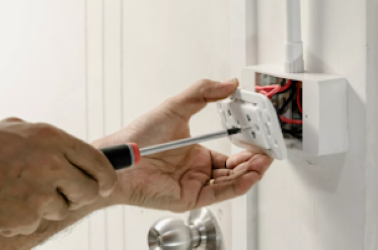
If your home was built before 2008, it may not have TRRs installed. Upgrading to TRRs is a straightforward process that involves replacing standard outlets with tamper-resistant models. For safety and compliance, it’s best to hire a licensed electrician to perform the installation.
While upgrading, consider pairing TRRs with other electrical safety measures, such as installing ground fault circuit interrupters (GFCIs) in wet areas and surge protectors to safeguard appliances.
Frequently Asked Questions About TRRs
Q: Are TRRs expensive to install?
A: TRRs are relatively affordable, with individual units costing only slightly more than standard outlets. Installation costs depend on the number of outlets being replaced.
Q: Can TRRs be used in older homes?
A: Yes, TRRs can be installed in any home. An electrician can replace existing outlets with TRRs to enhance safety.
Q: Do TRRs work with all types of plugs?
A: TRRs are compatible with standard two-pronged and grounded three-pronged plugs, ensuring they function seamlessly with household appliances.
Need Help Childproofing Your Home's Electrical System?
If you have questions about tamper-resistant receptacles or need assistance upgrading your outlets, ABC Plumbing, Sewer, Heating, Cooling, and Electric is here to help. Call us today at 888-868-6667 for Chicago or 813-452-5952 for Tampa, or reach out online to schedule service. Let us help you create a safer home for your family.
ABC Plumbing Locations
Arlington Heights, IL220 W Campus Dr | Largo, FL11701 S Belcher Rd Suite 127 |
Downers Grove, IL1001 Ogden Ave LL4 | Tampa, FL4326 W El Prado Blvd Suite 7 |
Evanston, IL828 Davis St UNIT 205 | |
Related blogs



Our Blog
VIEW ALL BLOGS
Clearwater, FL Leak Detection and Repair: Find Hidden Water Leaks
-
Rockford HVAC: Heating System Installation Guide
Installing a central heating system involves much more than choosing a furnace or heat pump. This guide walks Rockford-area homeowners through the professional installation process, including system sizing, ductwork, permits, venting, electrical connections, thermostat setup, and final commissioning. It also explains which tasks may be DIY-friendly, when licensed professionals are needed, and how proper installation and annual maintenance can improve comfort, efficiency, safety, and system longevity.READ MORE -
Tampa, FL Electrical Safety Inspections Checklist
Your electrical panel is the heart of your home’s electrical system, and regular inspections can help identify potential hazards before they lead to outages, equipment damage, or fire risks. This guide explains what Tampa Bay homeowners can safely check themselves and what licensed electricians inspect inside the panel, including breakers, wiring, grounding, corrosion, GFCI/AFCI protection, and surge protection. It also covers common warning signs, inspection frequency, and when repairs or upgrades may be necessary to keep your home safe and code-compliant.READ MORE -
Rockford, IL Plumbing: DIY Risks for General Plumbing
DIY plumbing can save money on simple projects, but more complex work can lead to leaks, water damage, code violations, and safety concerns when handled incorrectly. This guide explains which plumbing tasks homeowners can safely tackle themselves and when it’s best to call a licensed professional. It also covers common DIY mistakes, permits and code requirements, hidden costs, and how professional plumbing service can protect your home, warranties, and investment.READ MORE
Our Promises To You
-

Convenient For You
We Work on Your Schedule
-

Background Checks
We do Drug Tests And Background Checks Before Hiring
-

No Need For Stress
Get ABCs Worry-Free Guarantee at No Cost
-

No Surprises
Pricing is By the Job, Not the Hour